

 Facebook
 X
X
 Pinterest
 Copy Link
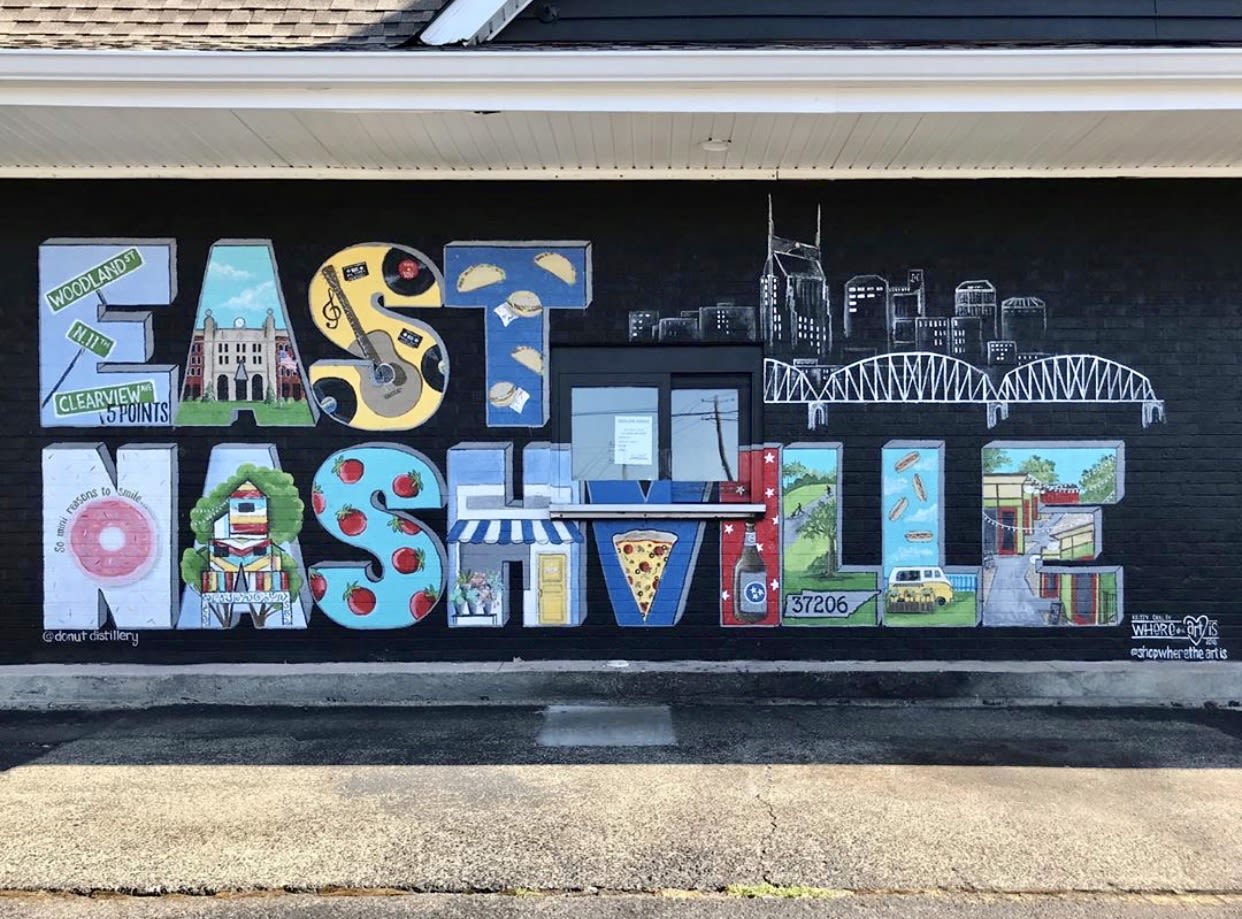
East Nashville Neighborhood Guide 2026: Where to Buy This Year
If you’ve been driving around East Nashville lately, you’ve probably noticed the same thing I have — this side of the river keeps finding new ways to reinvent itself. I’ve helped a lot of buyers land here over the past few years, and in 2026 it’s still one of the first neighborhoods I bring up when someone asks me where Nashville’s real personality lives. The coffee shops are packed, the porches are full on a spring evening, and the housing stock is as interesting as the people who live in it.
Spring is when East Nashville really shows off, so I wanted to put together a guide to the pockets I’m watching this year, what you can expect to pay, and who each area tends to fit best. Whether you’re relocating from out of state, upgrading from a starter home, or buying your first place, here’s how I’d think about it.
The Pockets I’m Watching in East Nashville This Spring
East Nashville isn’t one neighborhood — it’s a cluster of them, and each has its own rhythm. Five Points and Lockeland Springs remain the heart of it for a reason. You get walkability to Woodland Street and Eastland Avenue, tree-lined streets, and historic bungalows that buyers keep falling in love with. Inventory here is tight, and move-in-ready homes in the $700Ks to low $900Ks are seeing multiple offers within the first weekend.
Inglewood is the area I mention most often to buyers who want East Nashville character with a little more house for the money. You’re slightly farther from the Five Points action, but the mid-century ranches and split-levels offer more square footage per dollar — and Riverside Village gives you a quiet, walkable pocket of shops and restaurants that feels like its own small town.
Cleveland Park and McFerrin Park are where I’m pointing first-time buyers and investors who want to get into East Nashville without stretching into the $800Ks. New construction and thoughtful renovations are showing up on nearly every block, and proximity to downtown is hard to beat. If you can handle a neighborhood that’s still evolving, the long-term upside here is real.
For buyers looking a little farther east, Rosebank and Porter Heights are quieter, greener, and still surprisingly reasonable. They don’t get as much attention in the glossy articles, but for families who want a yard and a shorter commute than Madison or Hermitage, they punch above their weight.
What You’ll Pay and What You’ll Get in 2026
Pricing has settled into a healthier rhythm this year compared to the peaks we saw a few years ago. Here’s the honest rundown of what I’m seeing on the ground:
Entry-level single-family homes in Cleveland Park or McFerrin Park are generally landing in the high $400s to low $600s, depending on the level of renovation. Move up into Inglewood and you’re looking at $550K to $800K for a well-kept three-bedroom. Lockeland Springs and Five Points bungalows are typically $700K to $1.1M, with fully renovated historics pushing higher. New-construction townhomes across the area run roughly $500K to $750K, and tall-and-skinny new builds on double lots are often in the $800K–$1.2M range.
Interest rates are still a bigger part of the conversation than they were pre-2022, but buyers who locked in last fall are starting to benefit from a slightly cooler spring. Days on market have stretched just enough to make inspections and appraisals feel less like a sprint — a welcome change. If you’re a seller, the takeaway is that presentation matters more than ever: the homes that show clean, neutral, and staged are still moving quickly and at strong prices.
Making East Nashville Work for Your Lifestyle
The reason people fall for East Nashville isn’t the square footage — it’s the feel. I tell every buyer the same thing: spend a Saturday morning here before you put in an offer. Grab a coffee at Barista Parlor or Ugly Mugs, walk Shelby Park, and see whether the pace matches what you’re actually looking for. For some buyers, the walkability and creative energy are everything. For others, they’d be happier in Hendersonville or Mt. Juliet with a bigger yard and an easier commute, and that’s a real conversation worth having early.
If you have kids, school zoning matters a lot and shifts more often than you’d think, so I always pull the most current zoning on any house we tour. For commuters, access to I-24 and I-65 is genuinely better than people give it credit for — most of my clients working downtown are parking in their driveway within 15 minutes.
One last thing worth mentioning: East Nashville has a strong rental and short-term-rental market, so if you’re buying with an investment angle in mind, there are still opportunities — especially on duplexes and properties with detached ADUs. Just be careful about Metro’s permitting rules, which tighten up every couple of years.
If you’re thinking about buying or selling in East Nashville this spring, I’d love to help you look at the full picture — not just the listings, but the block, the zoning, the resale story, and whether the numbers actually work for your life. Reach out any time and let’s talk through it.
— Chirag Patel
Reliant Realty ERA Powered
chirag@realtor4nashville.com
